Stands
A Stand (スタンド Sutando) is a visual manifestation of life energy (in other words, the manifestation of the soul of the user). There are currently 18 Stands in Jojo: Crusaders’ Heaven, the Stands here in this game are from Part 3-7 (as there are no Jojolion Stands in-game yet). To obtain a stand, you have to use a Stand Arrow on Standless. Stands from the Steel Ball Run universe, however, require the item use of the Saint’s Corspe Parts, which are the Left Arm and the Left Eye. There is also another way to obtain a Stand, which is buying the Early Access Gamepass to use the stand that is currently being worked on.
The World Over Heaven

TWOH has the basic appearance of The World in Stardust Crusaders, but with alterations of white and yellow color scheme instead of yellow and lime. TWOH also has minor differences such as the bubble vest because the model is very likely made from the second to last model of The World, and is noticeably less detailed in masculinity.
Stand Cry
Namesake
The World (Tarot card)
OVER HEAVEN (Novel)
Eye Color
Pupil-less White
~Heaven Ascended DIO
Contents
- 1 Overview
- 2 How to Obtain
- 3 Tips and Tricks to Obtain TWOH
- 4 Skills
- 5 Combos and Tips
- 6 Trivia
- 7 Skins
- 8 Gallery
Overview [ ]
The World Over Heaven is an ascended version of The World from an alternate Universe where DIO successfully achieved Heaven, that appears in the «JoJo’s Bizarre Adventure: Eyes of Heaven» game as Heaven Ascension DIO’s Stand.
Originally, this Stand was paired with Hamon thanks to The World: Over Heaven’s passive ability. However, in an update after it’s release, it is no longer able to get the damage buff from Hamon, making it near useless on it now. Spin took it’s place thanks to it’s low cost and stun, but when the stun on Heaven Ascended Knives and Steel Balls were nerfed, it was dropped too. In recent times, Boxing and Vampirism have become the main specialties, though whether or not others will pop up remains to be seen.
In spite of it’s nerfs, The World: Over Heaven has remained as one of YBA’s strongest stands. One of the biggest reasons for this is because of its passive, Reality Overwrite. It is among the best passive abilities in the game, allowing the user to ignore defense boosts with attacks done by their Stand and deal true damage (e.g. The World: Over Heaven’s M1s will always deal 10.1 damage with maximum destructive power, even if the target has defense passives). Notably, The World: Over Heaven’s Knife Throw has a secondary upgrade. For four skill points, Heaven Ascended Knives can be purchased. This allows its Knife Throw to emit a small, AOE effect which deals minor damage and bypasses block. This move used to stun a target for unfair periods of time, which has since been nerfed, but the block bypassing nature of these knives make them useful in combos.
Other notable moves include Reality Overwriting Punch as it bypasses block, making it a great tool to steal momentum while debuffing the opponent by messing with their hitbox and removing a limb for some time. To top it off, it has a deceptively short cooldown. One of if not the most recognisable move that The World: Over Heaven can perform is Heaven Ascended Smite. It does a large amount of damage, has a massive hitbox, ragdolls the opponent, stand crashes them and can block break. Finally, The World: Over Heaven is notorious for having the longest Time Stop in the game, starting off at five seconds at base level and having a maximum of nine seconds. If an enemy is caught in a Time Stop, they can expect to lose half of their health almost instantly.
Even though it is a very strong stand, there are numerous downsides. Reality Overwriting Punch cannot be used without care as it is both parryable and cancellable, making it a high risk-high reward move. The World: Over Heaven’s healing moves are the second weakest in the game (Injury Overwrite in particular having a very long cooldown of 55 seconds, and healing a very insignificant amount). Heaven Ascended Smite can also be cancelled upon startup and having a longer cooldown. Time Stop, like all the others, can be cancelled if you are hit during the windup. Finally, it is currently the costliest Stand in all of YBA, clocking in at a massive 75 skill points, 5 more than other notorious high cost Stands like Killer Queen: Bites the Dust, Star Platinum: The World and D4C: Love Train.
The World: Over Heaven has consistently been meta and widely used thanks to its numerous advantages and powerful, consistent DPS, and continues to be a very powerful stand.
Total Skill Points: 75 Points
How to Obtain [ ]
This Stand is obtained with 3 steps. First, you need to find DIO´s diary on the game map and read it with base The World. The diary will give you the first quest, where you must win 25 matches in the 1v1 mode. Finish that and read the diary again for the second quest, where you have to kill 50 players in Steel Ball Run. After that, you have to collect all Saint’s Corpse Parts (redeemed and normal are both accepted) and talk to Jotaro Kujo. He will teleport you to Heaven Ascension DIO in order to get DIO’s Bone. After getting DIO’s Bone, you will have to go to The Tallest Peak near the Train Station. After getting to the top of it, resummon your The World, achieving The World Over Heaven. You do not require any Worthiness to do this. Upon obtaining this stand, the DIO’s Diary used to get The World Over Heaven as well as DIO’s Bone will both be removed from you inventory.
*Note: You need at least Prestige 2+ to have all the corpse parts.
Tips and Tricks to Obtain TWOH [ ]
1st quest: Win 25 games in the 1v1’s gamemode.
Use a stand you work best with. Using a stand that you’re good at can help you win 1v1s especially with people who aren’t good at 1v1s or using weaker stands than yours. Some of the best include evolved stands, Star Platinum, C-Moon, Made in Heaven, Magician’s Red, etc. Any stand that you are good at can work very well, even stands like Mr. President, so do not get discouraged if you do not have any of these. Sadly, kill trading does not work anymore as the first quest was changed from 50 kills to 25 wins. So you will need to put in effort to win 25 matches. There aren’t any solid tips or tricks other than to just get a grip and learn the ins and outs. Good luck!
2nd Quest: Kill 50 players in Steel Ball Run
Here, you have two ways of getting kills, you can kill trade or get kills by wiping. When kill trading, it is recommended to look for kill traders in Casual mode because there are a lot of people wanting to kill trade, some people lack PVP experience, and some people don’t really want to win either, which is the opposite of Competitive mode. When kill trading, there is a great risk of getting scammed of your kill. This happens when the kill trader doesn’t reset with you, where they will get a free kill and you don’t. So, be careful, or just choose the second, more violent option. When wiping, it is recommended to form a team. When claiming kills, you have to be the player that dealt the most damage to the target, so using stands that deal immense damage like The Hand, Anubis or Dirty Deeds Done Dirt Cheap can help significantly. Wiping can also help you more easily obtain a Corpse Part if you win, which helps in the next quest for unlocking TWOH. You can have your teammates let you kill them at the end of SBR as well if they allow it. (You have to kill 50 DIFFERENT people so if it doesn’t work, then your teammate had already given you a kill). This quest could take a long time so you might want to have some patience with it. In addition, there are plenty of guides and useful information on YouTube, that you can check out to get better. Don’t lose your cool!
3rd Quest: Obtain DIO’s Bone by defeating Heaven Ascension DIO in the Heaven Arena
It is not recommended to do the MiH quest alongside this, as if you do the MiH quest it will reset the TWOH quest and vice-versa.
There are a lot of good stands for killing Heaven Ascension DIO, but as long as you know his attack patterns, any stand would work. Using Hamon with The Hand for example does outrageous damage, and will help kill Heaven Ascension DIO quicker. You could also use Star Platinum: The World for this quest, as it is regarded as one of the best stands for farming bosses. The best tip for this quest is to get some experience with fighting him first. Memorising his attack patterns is very advantageous. You could also ask friends for help. One of the biggest issues people have with this quest is the amount of time it takes to obtain DIO’s Bone. Instead of a guaranteed drop, there is a chance for acquiring it. Not to mention how time consuming it is to kill this tanky boss. If he kills you, you have to climb all the way up to the tallest peak again. Good luck!
4th Quest: Stand on top of The Tallest Peak in Naples with DIO’s Bone and DIO’s Diary in your inventory, and summon The World to complete the Heaven Plan.
Upon completing this step, you will glow with orange light coming from the heavens, before a server-wide flash of white light occurs blinding everyone for a short while regardless of where they are. After the flash, The World: Over Heaven will be summoned in place of The World.
Skills [ ]
Passive — Reality Overwrite: Any damage that TWOH does will be «True», meaning it will bypass all passive defense buffs the enemy may have. This stacks with the Pluck M1 buff and also to the user’s spec’s damage.
LMB — Punch: This short move with a short cooldown deals 10.1 damage at max Destructive Power and can be done in quick succession 5 times, ultimately dealing a whopping 50.5 damage if all hit.
E — Stand Barrage: TWOH does a powerful and fast barrage, dealing 1.7 damage per hit with max Destructive Power.
R — Barrage Finisher: TWOH throws a heavy punch that ragdolls, dealing 20.1 damage.
T — Knife Throw: TWOH throws a knife which deals 8.1 damage. This can be upgraded to 3 knives, and getting the Heavenly Knives passive will provide a small AoE for your knives that bypasses block and cannot be parried. The downside is a longer cooldown.
Y — Reality Overwriting Punch: TWOH throws a punch similar to a Barrage Finisher, but this time TWOH overwrites the opponent and can bypass block. This deals 20.1 damage, has stun, and can cripple as well as randomize the opponent’s body shape similar to Chariot Requiem’s Conqueror’s Will and Made in Heaven’s Universe Reset. However, this move has a longer windup and is still able to be perfect blocked.
U — Self Injury Overwrite: TWOH Overwrites the user’s injuries, healing 36.9 HP (scales according to Midas Touch upgrades), removing all status effects, and recovering any missing limbs.
No upgrade: 18 heal
Midas Touch 1: 24.3 heal
Midas Touch 2: 30.6 heal
Midas Touch 3: 36.9 heal
X — Injury Overwrite: TWOH goes in front of the user, but instead of damaging, it heals whoever is hit for 36.9 HP (scales according to Midas Touch upgrades), as well as restoring all missing limbs similar to Gold Experience’s Distribute Life.
G — Heaven Ascended Smite: TWOH slams the ground with lightning from the heavens and causes powerful AoE damage, dealing 35 damage to anyone hit with high knockback and ragdoll. This move can be cancelled if hit during startup frames, but instantly breaks guard and cannot be parried. This move is great for ending combos.
Z — Time Skip: TWOH uses its Time Stop ability to teleport the user in the direction of their cursor.
H — The World: TWOH stops time, freezing people in place. During this time, you may move freely, escape from situations, hit anybody without much punishment, etc. You cannot run during TS or use Time Skip. After time starts moving again, all damage you dealt to anybody currently frozen will be dealt to them immediately. Time Stop has a longer cooldown of 1 minute and 10-second cooldown. Every upgrade adds about 1 second to the Time Stop duration, the max being around 9 seconds and like all Timestop stands, it also has a 50% damage cap.
Time Stop Mastery 1 [6 Seconds of Stopped Time]
Time Stop Mastery 2 [7 Seconds of Stopped Time]
Time Stop Mastery 3 [8 Seconds of Stopped Time]
Time Stop Mastery 4 [9 Seconds of Stopped Time]
Combos and Tips [ ]
Trivia [ ]
- This Stand was added on 1/29/2021 alongside Made in Heaven.
- TWOH and KCR are the only Non-Canon Stands featured in Your Bizarre Adventure.
- Due to its namesake being a light novel, TWOH is technically the first and so far only stand in Your Bizarre Adventure to reference the JoJo light novels, although the Made In Heaven skin «One Above All» references a Stand, «Made In Heaven: Ultimate Requiem» from the Jorge Joestar novel.
- The World: Over Heaven was discovered in the game files before it was released. This leak caused many to believe it was being added, but the YBA staff team played it off as «bait» for leakers. However, it was added to the game not too long afterwards, meaning the YBA team was lying about it being bait.
- Initially, you needed to kill 50 players in 1v1’s to complete the first quest. However due to kill traders, this has changed, and it is now 25 wins.
- The reason for the TWOH quest needing you to win 25 1v1s and kill 50 people in SBR is because it was made to be a more difficult counterpart to killing 100 NPCs for Made in Heaven.
- Obtaining TWOH rewards the player with Heaven Ascension DIO’s Hair. You can also get this hair for killing Heaven Ascension DIO. Similar to this, you can get Joe v3(cosmetic) by killing Jotaro Kujo Part 6 (Boss).
- TWOH’s Mirage of Phantoms (see: Skins) skin is considered the most valuable skin in the game since its release in the 2022 Halloween Event, as it is the first limited TWOH skin. The reason MiH skins, even if they are limited, are worth less is because the MiH quest can be done repeatedly very easily, as you only need to kill some NPCs, Heaven Ascended DIO and Jotaro Kujo P6 for MiH. TWOH requires you to win 25 1v1s and 50 SBR kills which is definitely more difficult. Another reason for this difference in value is because more people play TWOH compared to MiH, so demand for TWOH skins are higher.
- When the stand was first added, it was the most powerful stand in the game. It did not have a damage cap in time stop combined with its absurd damage and the passive ability Reality Overwrite made TWOH absolutely broken. On release it worked with Hamon, allowing you to deal even more damage. Since then it no longer works and was instead used with Spin, then Boxing.
- Reality Overwriting Punch used to be one of the best moves in the game. Unfortunately, it got nerfed a lot. The deformation time has been decreased and no longer stuns.
- The World Over Heaven is now often paired with the Boxing style, generally for combos, but also for damage and tankiness.
- Although Non-Canon, The World Over Heaven is the strongest stand in the franchise.
- Part 6 spoilers:
| Spoilers! The following reveals important elements of the plot. |
|---|
| Pucci needed Green Baby because DIO was dead and The World was a requirement for the original Heaven Plan, Green Baby is made from DIO’s Bone as a substitute for The World. There are many inaccuracies in The Way to Heaven in YBA such as the fact that Jotaro Disc is not required because in Eyes of Heaven, DIO’s Diary was burned and only Jotaro remembered the content of DIO’s Diary. With DIO’s Diary, you don’t need Jotaro Disc. |
- Eyes Of Heaven (Game) spoilers:
| Spoilers! The following reveals important elements of the plot. |
|---|
| In the Jojo Game Eyes of Heaven, there was an alternate timeline Dio, who defeated the Joestars instead of losing to them, and retained his greatest high, continuing to carry on his Heaven Plan with Pucci, and managed to achieve heaven. With his new stand, he erased the entire universe and made it his own, and everyone follows his orders. Later on, the events of Steel Ball Run was near the end, where Valentine was under the case of the Infinite Rotation. Valentine was searching through this dimensions because he was attempting to escape the infinite rotation. During his search, he found Heaven Ascension Dio’s world, and Dio used his power of the stand to rewrite Valentine to the point he never had the Infinite Rotation on him. Valentine told Dio about how Dio’s world is merely an alternate universe that branches off the main universe, and about the Saint’s Corpse Parts, and that all the corpse parts lie in a ‘Base World’. Because Dio already conquered his own universe, he decided to travel to the main universe as well. This is what lead to the events in Eyes Of Heaven, and later the fall of Heaven Ascension Dio in Jotaro’s hands. |
Tusk Act 1 [ ]
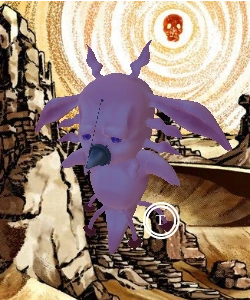
Tusk is the Stand of Johnny Joestar, the main protagonist featured in JoJo’s Bizarre Adventure: Steel Ball Run. Tusk is a Stand consisting of ACTs. In JoJo’s Bizarre Adventure, Stands with ACTs are Stands that develop over time until they reach their final form/act.
Appearance [ ]
ACT1 resembles a small animal. Its head is of equal or slightly greater size than its body, and it floats with two short, vague, and inarticulate arms and one such leg.
Its posterior is marked somewhat irregularly by small stars, behind which dark circles radiate to their points; while four tendrils droop from the base of its trunk to the approximate length of its leg, bearing heart shapes.
On its head, it bears two long, mammalian ears; small, reflective black eyes, under a brow of a troubling angle; a large star at the top of its forehead, behind which a dark circle radiates to its points, and from the center of which a string links with the tip of a cone fastened to the region of its nose.
Attainability [ ]
This stand has been released, and can be obtained by using Left Arm of the Saint’s Corpse, which is obtained from the Mysterious Bag.
Moves [ ]
| Keybind | Move | Descripton | Damage | GIF |
|---|---|---|---|---|
| R | Nail Slash | You spin the nails in both hands and slash the opponent (can be used without having your stand out but will not deal damage) | 11 per slash ( 2 slashes) for a total of 22 damage. |  |
| C | Multi Nail Shot | With the help of Tusk Act 1, Johnny uses spin in his fingernails at a high velocity and shoot them dealing decent damage. | Each nail does 4.7 damage for a total of 23.5 damage. |  |
| T | Nail Shot | You concentrate spin in your fingernail allowing you to shoot them and deal low damage. | 11 Damage |  |
| E | Focused Nail shot | You focus more into your fingernails to shoot a much stronger version of the normal nail shot. | 22-34 Damage |  |
| V | Drinks Tea | You pull out a cup of herbal tea and drink it. | It heals you for around 30 HP. |  |
Pros and Cons [ ]
Pros [ ]
- Multi Nail shot can deal good amounts of damage if all nails hit,
- Healing move.
Cons [ ]
- 1 mediocre close ranged move, making it exclusively a zoner.
- Long cooldowns.
Tusk Act 2

Information
Aliases
Stand User
Johnny Joestar (Part 7-8)
Origins Of Stand
Based on Tusk by Fleetwood Mac
Skins Count
Evolutions
Appearance
Eye Color
Full Appearance
Blue, Pink, Violet
Secondary Color
Yellow, Red, Purple
Combat Move Types
Barrage
Heal
Drink Tea (V)
Self Heal
Drink Tea (V)
Counter
Projectile
Focused Nail Shot, Nail Shot, Multi Nail Shot, Golden Rectangle Nail Shot
Ultimate
Stun
All Nail Shots
Tusk Act 2 [ ]
Summary [ ]
Tusk ACT 2 is the first evolved form of Tusk, accessed when Johnny makes progress in the technique of the Spin and uses the Golden Rectangle.
You need get Steel Ball(spawns around map) and 3000 money, then talk to npc gyro to obtain Tusk ACT2.
Appearance [ ]
Mechanically, ACT2 possesses small, sturdy torso and arms, greater in proportion to its head. From its head hang two barrel-shaped objects.
A barrel-like unit the size of its head is suspended at the base of a short, flat spine.
Tusk is primarily pink in all media featuring it. This appears to be sort of like a robot.
Attainability [ ]
You need to talk to Gyro with a Steel Ball and $3000 in hand whilst wielding TA1 to evolve into TA2
Moveset [ ]
| Keybind | Move | Damage | Description | Gif |
|---|---|---|---|---|
| LMB | M1 Combo | 3.25 damage per hit for a total of 22.75 | The user will punch the opponent 5 times, the 5th punch being that one that launches and ragdolls the opponent. |  |
| R | Nail Slash | 12 per hit for a total of 25 | Using spin on their nails, the user will slash the opponent with both of their arms whilst a yellow effect coming from their nails could be seen whilst they do so. |  |
| Hold E | Focused Nail Shot | 23.5 if uncharged, 37 if fully charged | The user will concentrate more spin and focus into their nail, thus making it stronger than their normal shot, then shoot it at the opponent — dealing more damage than a regular nail shot. |  |
| T | Nail Shot | 11.75 | The user will concentrate spin in their nails allowing them to shoot it out at their opponent. |  |
| Y | Golden Rectangle Nail Shot | 30.25 | The user will concentrate spin into their nails whilst approaching the Golden Rectangle as a self-similar and endless spiral to achieve an enchanced version of their nail shot. |  |
| V | Drinks Tea | Heals the user for 35 | The user will bring out a cup of tea and drink it to heal up their health. |  |
| C | Multi Nail shot | 26.7 if all hit | The user will concentrate spin into more of their nails then shoot it out rapidly towards their opponent. |  |
| Hold Z | Nail Glide | 0 | The user will add spin into their nails on of their hands, allowing them to move on the ground efficiently and fast. |  |
Pros [ ]
- High damage if used correctly.
- Healing move.
Cons [ ]
- Nail Glide speed is slow, making it unreliable for combat.
- Weak knockback
- 1 mediocre short ranged attack, making it exclusively a zoner.
Tusk Act 3

Information
Aliases
Stand User
Johnny Joestar (Part 7-8)
Origins Of Stand
Based on Tusk by Fleetwood Mac
Skins Count
Evolutions
Appearance
Eye Color
Full Appearance
Blue, Pink, Grey
Secondary Color
Yellow, Red, Purple
Combat Move Types
Barrage
Heal
Drink Tea (U)
Self Heal
Drink Tea (U)
Counter
Projectile
Focused Nail Shot, Nail Shot, Multi Nail Shot, Golden Rectangle Nail Shot, Wormhole Nail Shot
Ultimate
Wormhole Nail Shot (V)
Stun
All Nail Shots
Tusk Act 3 [ ]
Summary [ ]
Tusk is the Stand of Johnny Joestar, the main protagonist featured in JoJo’s Bizarre Adventure: Steel Ball Run. Tusk is a Stand consisting of ACTs. In JoJo’s Bizarre Adventure, Stands with ACTs are Stands that develop over time until they reach their final form/act.
Appearance [ ]
ACT3 bears sharp spicky cocks growing from both the underside from its small, truncated, disc-shaped hands, similar to that of D4C: LT’s left hand. It also has three of those same spikes on its 3 toes, on its feet.
On its dark, spherical shoulders it bears the large, bold outline of a star; and from its upper lip to the rear of its head runs a tall, blade-like protrusion resembling a Mohawk.
Although it is distinctly more human in shape, its head is still embedded into its body, foreshadowing Tusk ACT4’s head placement.
Attainability [ ]
Read the Holy Bible whilst wielding TA2 to evolve into TA3
Moveset [ ]
| Keybind | Move | Damage | Description | Gif |
|---|---|---|---|---|
| LMB | M1 Combo | 3.25 damage per hit for a total of 22.75 | Similar to TA1 and TA2, the user will punch the opponent exactly 5 times, the 5th punch being the one that launches and ragdolls the opponent. |  |
| R | Nail Slash | 12 per hit for a total of 25 | Adding spin on their nails, the user will slash the opponent with both of their arms whilst a yellow effect coming from their nails could be seen whilst they do so. |  |
| Hold E | Focused Nail Shot | 23.5 if uncharged, 37 if fully charged | The user will concentrate more spin and focus onto one nail, thus enchancing the power of the nail and making it stronger than their regular version, then shoot it out towards the opponent — dealing greater damage than their regular nail shot. |  |
| T | Nail Shot | 11.75 | The user will add spin onto one of their nail then shoot it out towards the opponent. |  |
| Y | Golden Rectangle Nail Shot | 30.25 | The user will concentrate spin onto one of their nail whilst approaching the Golden Rectangle as a self-similar and endless spiral to achieve an enchanced version of their nail shot, stronger than their Focused Nail Shot, with a perfect rotation and infinite energy, which then the user will shoot it out towards the opponent. |  |
| U | Drinks Tea | Heals the user for 35 | The user will bring a cup of tea and drink it to heal up their health. |  |
| V | Wormhole Nail Shot | 26.25 | By concentrating spin into their nails with aureal rotation, the user is able to create wormholes which then allows them to shoot through it and towards the opponent from different angles. |  |
| C | Multi Nail shot | 26.7 if all hit | The user will concentrate spin into more than one of their nails, then shoot it out rapidly towards their opponent. |  |
| Hold Z | Nail Glide | 0 | The user will concentrate spin into one of their hands’ nails, then use it to glide across the ground efficiently and fast. |  |
Pros and Cons [ ]
Pros [ ]
- High damage if used correctly.
- Healing move.
Cons [ ]
- Nail speed is sort of slow, making it unreliable for combat and more for running.
- Weak knockback
- 1 mediocre short ranged attack, making it exclusively a zoner.
ОСКУДЕНИЕ ПРАВОСЛАВИЯ Текст научной статьи по специальности «История и археология»
: В статье автором осуществлен ретроспективный анализ событий и процессов, приведших к оскудению и трансформации канонов православия и святоотеческой традиции русского христианства. На основе непреложных фактов автор показал ложность утверждений клира и богословов о сохранении и преумножении исходного импульса веры, данного верующим во времена первого пришествия Иисуса Христа через апостолов и праведников. Запреты и упование на добрые намерения оппортунистов внутри тела церкви привели к закономерному искажению учения и предательству идеалов первых христиан и Святого семейства. В результате оного православная церковь стала уязвимой пред давлением лжи и обмана Люцифера и обратилась из источника жизни в прислужника смерти и тьмы. Ключевые слова: христианство, православие, клир, паства, Иисус Христос, Апокалипсис, Иоанн Богослов, Святое семейство, Патриархи, хронология. Постановка проблемы: Традиционная святоотеческая традиция находится в русле изжившей себя архаичной парадигмы противопоставления православия остальному христианскому миру, полагает себя за свет спасения в мире хаоса и приближающегося Апокалипсиса. Отсутствует какая-либо самокритика и программа сопротивлению злу и влиянию Зверя на души паствы и клира. Анализ последних исследования и публикаций: Публикации богословов за последние годы в классических изданиях не подвергают сомнению нормы и каноны святоотеческой традиции и закрывают глаза на массу противоречий и нестыковок, выявленных за последние десятилетия изучения и уточнения хронологии и истории христианства. Выделение нерешенных ранее частей общей проблемы: Общим местом стали утверждения православной церкви о сохранении и приумножении традиций учения, что является самообманом и ложью. Проблемы деградации учения, подлогов и манипулирования историческими фактами нуждаются в независимом исследовании и обнародовании. Цель статьи: На основе изучения многовекового движения православия от становления к упадку, через факты проникновения лжи в ткань учения и святоотеческой традиции, оценить способность церкви к противодействию влияния Люцифера на клир и паству в годину испытаний Апокалипсиса.
i Надоели баннеры? Вы всегда можете отключить рекламу.
Похожие темы научных работ по истории и археологии , автор научной работы — Кубарев В.В.
ДАТИРОВКА НОВОГО ЗАВЕТА
ОСОБЕННОСТИ ХРИСТИАНСТВА В КАППАДОКИИ
СОЦИАЛЬНЫЕ ДОКТРИНЫ КОНСТАНТИНОПОЛЬСКОГО ПАТРИАРХАТА И РУССКОЙ ПРАВОСЛАВНОЙ ЦЕРКВИ: СРАВНИТЕЛЬНЫЙ АНАЛИЗ ПОЛИТИЧЕСКИХ ПОЛОЖЕНИЙ
РОБЕРТ БАРНЗ И АНГЛИКАНСКАЯ РЕФОРМАЦИЯ
ДАТИРОВКА НОВОГО ЗАВЕТА
i Не можете найти то, что вам нужно? Попробуйте сервис подбора литературы.
i Надоели баннеры? Вы всегда можете отключить рекламу.
IMPAIRMENT OF ORTHODOXY
In the clause, the author has carried out a retrospective analysis of the events and processes that led to the impoverishment and transformation of the canons of Orthodoxy and the patristic tradition of Russian Christianity. On the basis of immutable facts, the author has shown the falsity of the claims of the clergy and theologians about the preservation and multiplication of the initial impulse of faith given to believers at the time of the first coming of Jesus Christ through the Apostles and the righteous. Prohibitions and reliance on the good intentions of opportunists within the body of the Church led to a natural distortion of the teaching and betrayal of the ideals of the first Christians and the Holy Family. As a result, the Orthodox Church became vulnerable to the pressure of Lucifer’s lies and deception and turned from a source of life into a servant of death and darkness. Keywords: Christianity, Orthodoxy, clergy, flock, Jesus Christ, Apocalypse, John the Theologian, Holy Family, Patriarchs, chronology. Statement of problem: The traditional patristic tradition is in line with the outdated archaic paradigm of opposing Orthodoxy to the rest of the Christian world, believing it self to be the light of salvation in a world of chaos and the approaching Apocalypse. There is no self-criticism and no program to resist evil and the influence of the Beast on the souls of the flock and clergy. The analysis of the last of research and publications: The publications of theologians in recent years in classical publications do not question the norms and canons of the patristic tradition and turn a blind eye to a lot of contradictions and inconsistencies revealed over the past decades of studying and clarifying the chronology and history of Christianity. Allocation unresolved before parts of the general problem: The statements of the Orthodox Church about the preservation and multiplication of the traditions of teaching, which is self-deception and a lie, have become a common place. The problems of the degradation of teaching, forgery and manipulation of historical facts need independent research and publication. The purpose of clause: Based on the study of the centuries-old movement of Orthodoxy from formation to decline, through the facts of the penetration of lies into the fabric of teaching and patristic tradition, to assess the East European Scientific Journal #7(83), 2022 15 ability of the church to counteract the influence of Lucifer on the clergy and flock in the year of the trials of the Apocalypse.
Текст научной работы на тему «ОСКУДЕНИЕ ПРАВОСЛАВИЯ»
doctor of history, professor Orthodox Russian Academy
IMPAIRMENT OF ORTHODOXY
доктор исторических наук, профессор Православная Русская Академия
Summary: In the clause, the author has carried out a retrospective analysis of the events and processes that led to the impoverishment and transformation of the canons of Orthodoxy and the patristic tradition of Russian Christianity. On the basis of immutable facts, the author has shown the falsity of the claims of the clergy and theologians about the preservation and multiplication of the initial impulse of faith given to believers at the time of the first coming of Jesus Christ through the Apostles and the righteous. Prohibitions and reliance on the good intentions of opportunists within the body of the Church led to a natural distortion of the teaching and betrayal of the ideals of the first Christians and the Holy Family. As a result, the Orthodox Church became vulnerable to the pressure of Lucifer’s lies and deception and turned from a source of life into a servant of death and darkness. Keywords: Christianity, Orthodoxy, clergy, flock, Jesus Christ, Apocalypse, John the Theologian, Holy Family, Patriarchs, chronology.
Аннотация: В статье автором осуществлен ретроспективный анализ событий и процессов, приведших к оскудению и трансформации канонов православия и святоотеческой традиции русского христианства. На основе непреложных фактов автор показал ложность утверждений клира и богословов о сохранении и преумножении исходного импульса веры, данного верующим во времена первого пришествия Иисуса Христа через апостолов и праведников. Запреты и упование на добрые намерения оппортунистов внутри тела церкви привели к закономерному искажению учения и предательству идеалов первых христиан и Святого семейства. В результате оного православная церковь стала уязвимой пред давлением лжи и обмана Люцифера и обратилась из источника жизни в прислужника смерти и тьмы. Ключевые слова: христианство, православие, клир, паства, Иисус Христос, Апокалипсис, Иоанн Богослов, Святое семейство, Патриархи, хронология.
Statement of problem: The traditional patristic tradition is in line with the outdated archaic paradigm of opposing Orthodoxy to the rest of the Christian world, believing it self to be the light of salvation in a world of chaos and the approaching Apocalypse. There is no self-criticism and no program to resist evil and the influence of the Beast on the souls of the flock and clergy.
Постановка проблемы: Традиционная святоотеческая традиция находится в русле изжившей себя архаичной парадигмы противопоставления православия остальному христианскому миру, полагает себя за свет спасения в мире хаоса и приближающегося Апокалипсиса. Отсутствует какая-либо самокритика и программа сопротивлению злу и влиянию Зверя на души паствы и клира.
The analysis of the last of research and publications: The publications of theologians in recent years in classical publications do not question the norms and canons of the patristic tradition and turn a blind eye to a lot of contradictions and inconsistencies revealed over the past decades of studying and clarifying the chronology and history of Christianity.
Анализ последних исследования и публикаций: Публикации богословов за последние годы в классических изданиях не подвергают сомнению нормы и каноны святоотеческой традиции и закрывают глаза на массу противоречий и нестыковок, выявленных за последние десятилетия изучения и уточнения хронологии и истории христианства.
Allocation unresolved before parts of the general problem: The statements of the Orthodox Church about the preservation and multiplication of the traditions of teaching, which is self-deception and a lie, have become a common place. The problems of the degradation of teaching, forgery and manipulation of historical facts need independent research and publication.
Выделение нерешенных ранее частей общей проблемы: Общим местом стали утверждения православной церкви о сохранении и приумножении традиций учения, что является самообманом и ложью. Проблемы деградации учения, подлогов и манипулирования историческими фактами нуждаются в независимом исследовании и обнародовании.
The purpose of clause: Based on the study of the centuries-old movement of Orthodoxy from formation to decline, through the facts of the penetration of lies into the fabric of teaching and patristic tradition, to assess the
ability of the church to counteract the influence of Lucifer on the clergy and flock in the year of the trials of the Apocalypse.
Цель статьи: На основе изучения многовекового движения православия от становления к упадку, через факты проникновения лжи в ткань учения и святоотеческой традиции, оценить способность церкви к противодействию влияния Люцифера на клир и паству в годину испытаний Апокалипсиса.
The basic material: Orthodoxy (Gr. op0o5o^ia) means «right glorification» or «right opinion». Now fidelity to the teaching of the Church is maintained through the practical development of the patristic heritage, rather than theoretical understanding of the truths of the Christian faith. Any deviations, discussions and criticism are declared heresy. At the same time, the Orthodox Church is convinced that the forcible retention of the positions of faith and canons is more important than establishing the truth. The Church is in thrall to the opinion that it has always done so, therefore, distortions could not get into the teaching and it is simply necessary to protect the tradition set out in the decisions of the Councils, canons, books and documents.
At the same time, it is known that the modern version of Christianity was actually formed in the XVII-XIX centuries by the efforts of people who have nothing to do with the Kin of Russ, who created Orthodoxy and gave the world many Patriarchs, Equal-to-the-Apostles, Saints and Hierarchs.
Let us consider in retrospect the process of betrayal of Russia and the degradation of the patristic tradition by the Russian Church as it moves into the past.
In the XVIII-XIX centuries in Russia, theology and the independence of the Church ceased to exist. In 1700-1720, Peter the Great abolished the Patriarchate in Russia and established a Spiritual Board, later the Holy Government Synod, making the Church part of the state administration. Church life and canons were controlled by officials and scholars from Europe, who introduced into Orthodoxy the practices of the Catholic and Protestant West and the fantasies of Jewish rabbis and Zionists. As part of the censorship of the doctrine in the XVIII century, ancient frescoes of temples and monasteries created by Russian icon painters, for example, Andrei Rublev, were destroyed or painted over. Instead of frescoes, universal iconostases with the «correct» version of Biblical events began to be installed. The octagonal Stars of Russ began to change into the hexagonal Stars of David.
In 1859, the Palestine Committee emerged, transformed in 1864 into the Palestine Commission and in 1882 into the Imperial Orthodox Palestine Society. The Palestinian society actively supported the project of the Holy Land on the territory of the future Israel. Over the years, the Palestinian Society has printed tens of millions of books of the Bible and spiritual literature, making it accessible to citizens. After all, until the XIX century, ordinary people were forbidden to read and interpret the Bible. The Palestinian Society and the Academy of Sciences were intensively engaged in corrections and forgery of ancient handwritten chronicles and books as part of the «clarification of dogmas».
Accordingly, the Russian Orthodox Church (ROC) does not operate in the field of patristic tradition, but in the quagmire of illusions of the clergy and state officials of Russia who lived during the years of the Russian Empire. Instead of the ancient Orthodox patristic tradition, Tsarism imposed the dogmas of the Judeo-Christian paradigm established in the West. According to the new ideas, Jesus Christ and the Holy Family are declared Jews and Semites, like all Patriarchs of Monotheism, but not Israelis, and Biblical events are geographically concentrated in Palestine, Egypt and the Middle East.
In the XIX century, the Palestinian Society began to persuade the Orthodox to make a pilgrimage to Palestine to visit Holy Places. The Mission of Saint Sergius of Jerusalem was opened in Jerusalem. Scientists and priests in Russia have done a great job of «finding» ancient books and chronicles, as well as making numerous edits to existing lists. The book The Life and Walk of Abbot Daniel from the Russian land, dated to the beginning of the XII century, was introduced into scientific circulation [1]. The book perfectly describes the geography and shrines of Palestine, known only in the XIX century. As a measure of length, Abbot Daniel used a Verst (Mile), which came into use only in the XVII century.
The translations of the Bible from Greek were changed in order to replace the truth with good intentions. Including the word «Tartarus» began to be written as «abyss». After all, after Russia conquered Siberia and the Far East, a bad luck came out when the country became part of Tartarus and got into its possession the area with the lair of the Beast.
In 1810, with the support of the Emperors of France and Russia, the Kuvuklia (Empty Tomb) or the Holy Sepulchre was built in the Church of the Holy Sepulchre. Since then, the pilgrimage has been redirected from Constantinople-Constantinople to El Quds, which became known as Jerusalem.
A little earlier in the 1650s, Patriarch Nikon carried out the reform of the Russian Church, causing irreparable damage to Orthodoxy and making significant distortions, including the three-finger sign of the cross. Patriarch Nikon came from the Mari or Mordvinian peasants of Nizhny Novgorod. He organized the censorship of liturgical books and the unification of Russian liturgical practice with the Greek tradition. At the same time, the Greek Church and the Ecumenical Patriarch have been in captivity of the Ottoman Empire for more than 200 years.
The real crime of Orthodoxy against the Mother of God was the tragedy with her mortal body that happened in the Kiev Pechersk Lavra. In 1617, a marble coffin of the Theotokos, dressed in royal robes, was discovered near the Limit of John the Baptist of the Cathedral of the Dormition, which crumbled to dust
when the lid was opened. The Virgin looked like a gray-haired virgin girl asleep with a blush on her cheeks. The deceased found in the men’s monastery was declared Princess Juliania. Soon the abbot of the Lavra had a dream that the Virgin in heaven stands ahead of all the girls and requires special reverence for herself [2]. Therefore, the Virgin’s body was laid at the altar of the Cathedral. For a century, the body of the Virgin remained as if alive. Finally in 1718, the monks of the monastery set a fire in the Church, in the fire of which the Virgin’s body was charred beyond recognition. After that, the relics of «Saint Juliana» were placed in a trunk and transferred to the Nearby Caves of the Lavra. People who believe in the Mother of God, sanctified by the dignity, destroyed the nature of the Intercessor of Russia, untouched by time and people. I believe that this outrage rejected the Most Holy Theotokos from Russia back in 1718.
The previous blow to the Church was the Hundred-Domed Cathedral of 1551, convened by Ivan the Terrible in Moscow. In fact, he fully supported the decisions and reforms of the Trident or XIX Ecumenical Council of the Catholic Church (15451563) to change the chronology and geography of Biblical events.
At the same time, in the XVI century, Prince Andrei Kurbsky and Ivan the Terrible in their correspondence called Russia Israel, and the Princes Rurikovich «strong in Israel» [3]. During the oprichnina and the massacre organized by Ivan the Terrible, numerous Princes of Russ were killed — direct descendants of Patriarchs, Saints, Equal-to-the-Apostles and Hierarchs of Orthodoxy. About 700 families of people who keep the Holy blood of the Savior and the Patriarchs of Monotheism in their genes were killed. After this tragedy, the true knowledge and merits of the creators of Orthodoxy were lost or rejected by the Church clergy of Russia.
It should be noted that on the entire ancient frescoes of Cathedrals, Temples and Churches of Russia, the Monomashich Princes were always depicted with holy halos around their heads. The true sanctity by birth of the members of the Russ -Rurikovich Family was later presented as an unfair advertisement of the Russian nobility.
The real reason for the change in the localization of Biblical events and the ethnos of the Patriarchs of mankind was the fall of Constantinople in 1453 under the blows of the Ottoman troops. Before these sad events, Russian prelates and fathers of the Church regularly made pilgrimage visits to Constantinople is the True Jerusalem of Orthodoxy.
One of the last pilgrims to the Holy Places -Constantinople and Athos, were the theologians St. Nil Sorsky (1433-1508) and St. Innocent (in the live Ivan) of the Princely family Okhlyabin (died in 1491 or 1515). The original Life, containing information about the journey to the Holy Places, was burned in 1538 [4]. Later, the Church claimed that they had also been to Palestine, which in our opinion is lie.
One of the most famous Russian pilgrims to the Holy Land was Stefan Novgorodets, who made a
pilgrimage to Constantinople and not to Palestine at all, in 1348 or 1349. The only source of knowledge about Stefan is his work, entitled in the manuscript From the Wanderer Stephen of Novgorod [5]. It was first published by I.P. Sakharov in the collection Travels of Russian People in 1839. Publishing this text, Sakharov said that he had previously been considered an unreliable list from the Walking of Abbot Daniel [1]. The book indicated that Stefan in Constantinople met with Novgorodians — Ivan and Dobrila, copyists of books who lived in the Monastery of the Stoudios. The originals of the Walk, of course, have not been preserved, because they were destroyed for good purposes.
In the 1320s, on the outskirts of Constantinople, near the Palace of Anna of Byzantium/Porphyrogenita and the Virgin in Blachernae, the Chora Church (Spas in the Fields) was built. Mosaics and frescoes with a picturesque Gospel reflecting the life of Jesus Christ and the Virgin were painted on the walls of the Temple. The canons of the beginning of the XIV century differ significantly from modern dogmas. For example, the Evangelists depict Saints John, Cosmas, Joseph and Theophan. There are no images and names of the canonical evangelists Luke, Mark and Matthew. The genealogy of Jesus also does not coincide with the traditional one today. The mosaics show that the High Priests in the «pre-Christian» era blessed people with the sign of the cross. Constantinople is depicted by Jerusalem, where there is an icon of the Virgin with the infant Jesus above the Golden Gate. According to the paintings, the family of the Virgin has not been to Egypt. Further, Anna and the Virgin wore purple cloaks, worth their weight in gold, which the wives of Emperors often could not afford, etc. See the article The Picturesque Gospel of the Chora Church (Kariye) in Istanbul [6].
The most famous pilgrim to the Holy Places of the early period of the formation of Christianity in Russia was the Archbishop of Great Novgorod Anthony of Novgorod, in the world Dobrynya Yadreikovich (died in 1232). In the Novgorod first chronicle for 1211 it is written [7]:
«. came. Dobryna Yadr’ikovitsa has taken the Caesar of the City and brought the Holy Sepulchre with him. and the Archbishop Antonia has been installed there.»
Dobrynya in 1200 went to the Holy Places in Constantinople, where he lived for several years. At the same time, he never intended to go to Palestine, as it is said in the Life. Naturally, the original Pilgrim’s Book was «lost» during the Romanovs’ reign. Dobrynya found the capture of Constantinople by the Crusaders in 1204, where he took action to save the shrines. From his pilgrimage he brought to Novgorod the robes of Theodore Stratilates, the relics of Blasius of Sebaste, part of the stone from the tomb of John the Theologian, a particle of the True Cross, the stone of the Empty Tomb and the relics of the Great Martyr Barbara. According to some reports, the stone of the Holy Sepulchre eventually fell into the New Jerusalem Monastery near Moscow.
In the XIX century, the text of the book The Life and Walk of Abbot Daniel from the Russian Land, dating from the beginning of the XII century, entered scientific circulation [1]. Initially, it was believed that the journey took place in 1113-1115, and now they think that in 1104-1105. Nothing is known about Daniel himself. The traveler unexpectedly made a completely accurate description of the road from Constantinople to Jerusalem in Palestine gave the names of cities and distances between points, which he measured in Versts (Mile). In the information about Jerusalem there is a description of the Easter service in the Church of the Holy Sepulchre and the descent of the Holy Fire. At the same time, it is recognized that Daniel made serious mistakes in topography and history. It is known that the measure of the length of a Mile (Verst) appeared in everyday use only in the XVII century. Versts were called pillars on Verst roads. It is clear that in the XII century no one was engaged in the installation of pillars and the arrangement of roads. In the past, a measure of the length of the popriche (one day of way) was used. Most likely, the fake about the journey to the Holy Land was fabricated by the future founders of the Palestinian Society in the XIX century in order to make an ancient justification for the inventions of chronologists and Masons.
Comparing the texts of the book of Daniel and the Tale of the Bygone Years of Nestor [9], written in the same years, the modernity of Daniel’s style and language catches the eye. On the contrary, the language of Nestor is slow and difficult to understand, which once again confirms the forgery of Daniel’s Walking. The Orthodox Church approved this treatise and made it part of the patristic tradition.
Let us move further into the depths of the centuries, bearing in mind that the metropolitans of Russia received appointments in Constantinople and the Russian Princes maintained ties with Byzantium by concluding dynastic marriages with the daughters of the Emperors (Sophia Palaiologina, Olga Komnenos, Anastasia Monomachos and Anna Porphyrogenita). Before the conquest of Russia by the hordes of Genghis Khan in the 1230s, the Princes of Russ confirmed the Title of Grand Prince in Constantinople with the Emperor. After the Mongol occupation, the Princes began to receive a label to rule in the Golden Horde. As a result, Russia politically and spiritually lost its centuries-old connection with the New Rome and the Ecumenical Patriarch.
Only 180 years before the Mongol occupation, the last Emperor of the Russ and Rurik dynasty ruled in New Rome — Constantine Monomachos, aka Yaroslav the Wise [8]. Due to opposition from the Byzantine elite, Constantine Monomachos failed to hand over the reins of the Empire to Prince Vsevolod, even arranging a dynastic marriage in the 1040s with one of the Princesses of New Rome — his relative, as well as reins to grandson Vladimir Monomachos. The termination of the rule of the Macedonian dynasty in Constantinople created conditions for further distortion of Orthodoxy and oblivion of the role of the Macedonian dynasty and
the Lekapenos dynasty as participants in the events of the New Testament in the 1010.
So in the Tale of Bygone Years [9] (about 11101118), the authorship of which is attributed to the Kievan monk Nestor, we observe late inserts concerning the general Biblical history and world chronology, in which there is no place for the participation of the Kin Russ — Rurik in the Old and New Testaments. At the same time, we see in the Creed adopted by Saint Vladimir, the Arian heresy about the likeness of the Son to the Father, instead of unity. There is also no mention of the Virgin Mary, Pontius Pilate and the Apostolic Church. According to our reconstruction, this means that at the time of the baptism of St. Vladimir, Jesus Christ was not crucified and the New Testament had not yet occurred (1010).
It is also interesting that in 1065, the TBY [9] described a double celestial phenomenon — an total eclipse of the Sun and Supernova M1 flare in the constellation Taurus, which occurred in 1054 (May-July) and were well observed in China near the Qufu city, where Jesus Christ Chrysostom died in earthly life. In Russia, this Sun Eclipse was not observed at all, and there is no direct connection in chronicle of the phenomenon with the death of the Savior, but the information remained.
Note that when reading an earlier clause of the Kiev monks — the Patericon of the Kiev-Pechersk Lavra [2], we find records of the active interaction of Jesus Christ Chrysostom/Zlatoust and the Virgin Mary with the monks and founders of the Lavra, the Venerable Anthony and Theodosius. The appearances of Jesus Christ and the Virgin Mary are presented in the Patericon in the form of some miracles, in which the Savior and Mary hand over to the participants of the events quite earthly objects and money for the construction of the Church of the Virgin Dormition and for painting walls and icons with Biblical subjects. First, before his crucifixion, Jesus Christ gave the Voivode Simon Afrikaner a golden crown and belt (1010), and then in the 1050s-1060s, the Virgin Mary met twice in Constantinople with architects and icon painters in her palace in Blachernae, previously owned by her mother Princess Anna. During the meetings, the Mother of God stayed in Constantinople and gave to builders and icon painters the money, a holographic construction plan, her icon of the work of the Apostle Luke, relics of saints and other artifacts.
Thus, the Orthodox Church and the local Church of Russia refused to be related to the Mother of God, Anna and Joachim, John the Baptist and the Lord Jesus Christ Zlatoust himself. At the same time, the statement of the Virgin Mary is widely known that she will always be the defender of Russia.
Tell me please, what does the Virgin Mary care about Russia at all if she was Jewish and lived a thousand years before the formation of the Russian state?
It is important to note that during the entire period of the rule of the Macedonian dynasty and the Lekapenos dynasty (867-1056), there is not a single Chronicle left in Constantinople describing this rule. In
fact, all the information doubtful for late Christianity and historiography was destroyed. To conceal the real Biblical history of New Rome and Russia, the dates of birth and marriages, names and nicknames of Princes, Emperors, Princesses and bishops are deliberately distorted in Russian chronicles. For example, according to the TBY, Princess Olga gave birth to a son Svyatoslav at the age of about 60 years old [9], Grand Prince Basil is called Vladimir even after baptism, etc. In Byzantine historiography, the falsification of Armenian researchers was taken for granted that the members of the Macedonian dynasty and the Lekapenos dynasty were ethnic Armenians, and not ethnic Ugrians from the Volga region, like all Roman Flavians.
According to the author’s reconstruction of history [8, 10-13], the large-scale efforts of theologians, historians and chronologists, undertaken after the Council of Trent and the Stoglav Synod in the middle of the XVI century, led to a complete perversion of Biblical history and discrediting of the Holy Family, which was recorded in the righteous Jews. In fact, the Virgin Mary was born in the family of St. Vladimir and Princess Anna Porphyrogenita, later Bishop Joachim of Chersonesus, the future Archbishop of Great Novgorod, became Mary’s spiritual father. Jesus Christ Chrysostom was born at the junction of the 979/980, and all his deeds of life are accompanied by a cascade of Biblical astronomical phenomena. At the time of Jesus’ birth, comet Olbers (13P/Olbers) was observed. Jesus was crucified on Mount Beykoz on March 18, 1010, and resurrected exactly on the day of the vernal equinox on March 20, 1010 [13]. An annular solar eclipse was observed during the execution (An Annular 58th 94 Saros, 15:33 UT). The closest relatives of the Savior were the Emperors Basil and Constantine, the grandmother of Princess Anna, and he was executed by order of Ecumenical Patriarch Sergius II. It was not the Jews who crucified Christ, but the most respectable Christians who were waiting for his arrival. A special True Cross was used for the execution, according to legend, the Messiah on this cross was supposed to rise on the third day, and the fraudster simply perished. Chrysostom/Zlatoust lived a long life after his resurrection.
In the middle of 1054 (Total Eclipse 103 Saros 10.05.1054 and Supernova M1), the Savior died of old age in the Qufu city under the name of Kong, Confucius [10, 12]. In his honor, the world’s largest burial structure was created on a river island surrounded by one hundred thousand relict trees. The monument to Jesus Christ/Confucius reads The grave of the King who achieved perfect wisdom and perfection in enlightenment by great achievements. More recently, Chinese scientists extracted the incorruptible body of the deceased, who turned out to be a red-haired European with a harelip and a height of 190 centimeters. The results of the body examination are unknown.
Unfortunately, the Orthodox Church and the Ecumenical Patriarchate could not resist the falsifications, since in 1453 Constantinople was
captured by the Ottomans, and the Patriarch of New Rome lost his influence. According to the author’s hypothesis, Ivan the Terrible in the middle of the XVI century received financial assistance from Great Britain for the development of Muscovy, which led to the opening of the Moscow trading company and the approval of the censorship of the Old Testament and the role of the Kin Russ — Rurik in the New Testament.
The betrayal of the Biblical history of Russia also affected the events of the Old Testament. Recall that according to the author’s reconstruction of the history of religions, the first millennium of the Christian era corresponds to Old Testament Christianity and after the sacrifice of Jesus Christ in 1010, the Era of New Testament Christianity came. The concept of a «New era» corresponds to the beginning of the Christian era, according to the beliefs and terms of the Romans.
According to the Bulgarian chronicle [14] and the lives of Saints Cyril and Methodius, the wanderers visited Itil city, the capital of the Khazar Khaganate, around 860. According to the author’s reconstruction [10-13] and the Bulgarian chronicles [14], at first they went to the Crimea to baptize Khagan Lachin, aka Rurik. The Prince was cousin to Cyril and Methodius. Because of the war between Lachin and his older brother Djilki, they were forced to go to Itil, where they preached Orthodoxy and baptized one of the Princes, who was Rurik. The Russian chronicles are silent about Rurik’s Christianity, although seals of Rurik or his son Igor in the form of a falcon with a cross on his head were found in the vicinity of Great Novgorod. In addition, Russ was baptized under Askold and Dir in 867 and the Russian diocese was registered with the Patriarchate of New Rome under the number 61 and then 60. The modern Russian Church has been turning a blind eye to the presence of Christianity in Russia since the IX century. Even under the Romanov Tsars, the Church was more satisfied with the version about the baptism of Russia by Prince Vladimir. Note that Saint Vladimir was baptized with the name Basil, but Russian historiography and the Church call him Vladimir.
In his numerous works [8, 10-13], the author proved that the ancient Abraham was the Ugric Khagan Er Tash Artan (Tash Bash), aka the Emperor Titus Vespasian Flavius. Isaac is the Khagan Agha Ruzha, he is the Emperor Constantius Chlorus (Chlorus and Ruzha is a red hair color), and his son Jacob is the Khagan Kubar / Barys (Cube), he is the Emperor Constantine the Great. Even Patriarch Judas, supposedly a completely Jewish character, exactly corresponds to Khagan Budimir (Balamber), aka Emperor Valens. The Leader Moses turns out to be the Khagan Arbat, who received the Roman military rank Dux Moiseia (Leader of the province Moesia), then proclaimed Emperor Theodosius the Great. It is not for nothing that the true Orthodox in Russia went to the rack and the bonfire, so that in their beliefs and books the Dux Moiseia was not called Moses, because this is the name of the locality, and not a common name. Joshua is completely identified with Khagan Attila, aka Emperor Theodosius II. The great leader of the Bulgars
and Avars, an ethnic Ugric, Kagan Kubrat, received in 628 the religious title of King David, aka Emperor Heraclius, according to a source whose original has been lost [15]. Several silver dishes of the VII century with the history of Heraclius — David have been found in Cyprus. The next Prophet and Patriarch Solomon fully corresponds to the Khagan Sulabi (Suleiman), he is also the Emperor Justinian II Rhinotmetos.
In fact, we are dealing with the circumcision of the origins of the history of Russ and Russia during the IX-X centuries, they say, until that time, events and historical figures had nothing to do with Russian statehood and religion. In fact, the direct descendants of the Khagans Kubrat — King David and King Sulabi
— Solomon are the Rurikovich and the Saklan dynasty of Volga Bulgaria. In turn, Khagan Attila — Joshua is the direct ancestor of Kubrat, as well as Khagan Arbat
— the Leader Moses, and Khagan Budimir — Judah, as well as Khagan Kubar — Jacob, Khagan Agha Ruzha -Isaac and Khagan Tash Bash — Abraham. Accordingly, Russian historiography and Orthodoxy have thrown out of the memory of Russ and the people pride in their Patriarchs — Tash Bash, Red Aga, Kubar/Barys, Budimir, Arbat, Attila, Kubrat and Sulabi. Modern civilization and Orthodoxy consider Abraham, Isaac, Jacob, Judas, Moses, Joshua, David and Solomon to be ethnic Jews who lived in Palestine.
The Zionists, Catholics and Freemasons managed to realize a grandiose falsification due to the fact that the Russian Church obediently agreed to this deception due to the lack of an institute of its own scholars of theology. As a result of the erosion of Orthodoxy, the Eastern Church turned out to be on the side of the Beast, not the Almighty. These sins will be washed away with blood and will not be rewarded with bliss in heaven.
Russian theology not only did not develop, but was subjected to persecution and censorship. A striking example was the tragedy in the work and life of Professor Archimandrite Theodore. The theologian Alexander Bukharev in the XIX century said «Orthodoxy must be like the sun in our entire civil life . without spiritual constraint and violence to anything, but, on the contrary, to the revival and renewal of everything» [16]. Professor Feodor of the Moscow and Kazan Theological Academies tried to publish the work Studies of the Apocalypse. The authorities withdrew the essay from the press and Theodore was kicked out of work. Then he took off his monasticism and died in poverty at the age of 47.
Russian writer Alexander Bukharev [16,17] identified the Russian Church with «a wife clothed in the sun», and the Slavic-Russian people with her male infant, the force that will fight Satan and defeat evil and darkness. Theodore was convinced that the infernal serpent and the enemy of Christ were the Catholic Church and the West. All these narratives are widespread in the modern Russian Orthodox Church and Russian society. Fortunately for Alexander Bukharev, he did not live to see the revolution of 1917, when the supposedly God-bearing Slavic-Russian people zealously destroyed Churches and the priesthood, desecrated sacred relics and the Orthodox
faith itself. Bukharev also did not know that DNA genealogy would reveal the facts that the Slavic people (Haplogroup R1a1) originate from the womb of Tartarus — Sayan and Altai, therefore genetically bears the seal of Lucifer, imprisoned in a cage in these mountains. A hundred years after the bloody revolution, the Antichrist reigned in the heart of Russia — in the Kremlin and staged death, war and outrages in the Orthodox world. The Church, which Theodore personified with the Mother of God and the Wife of the Apocalypse, became the servant of the Beast, and Patriarch Kirill blessed the war and the destruction of Orthodox brothers and sisters. Thus, all the idealistic ideas of Bukharev and the Russian clergy were destroyed by life itself and proved their insignificance.
According to the author’s reconstruction of history [8, 10-13], the new Biblical time of the Apocalypse began on March 20, 2010, when exactly 1000 years after the resurrection of Jesus Christ in the True Empty Tomb of the Lord at the cemetery of Yoros near Constantinople, the Eyjafjallajokull volcano in Iceland exploded. The eruption of the well of the abyss (the fifth Angel) became the trigger for the fulfillment of the prophecies of John the Theologian about the trumpet voices of Angels [18].
In the history of Christianity, the time period of 1000 years occupies a special place. Previously, it was believed that after the resurrection of the Savior, the world would be given 1000 years before the Apocalypse, and after the Second Coming there would be a blissful new time of 1000 years, which the world would spend together with Jesus Christ. There are numerous trends of chiliasm or millenarianism in the Church that describe a possible future. At the same time, Christians believe that the first thousand years is conditional, simply as a long time, and not an exact calendar date. After all, formally the first thousand years have already passed, but the Apocalypse did not happen on Earth.
According to the author and according to the truth, Christians all over the world have misled themselves since the time of the Trent Council (15431563) and the Stoglav Synod in Moscow (1551). Theologically, the recognition of false postulates and chronology by Christians is caused by the influence of Lucifer or Satan, who has always sought to confuse people and deprive them of their chances of salvation. The false chronology threw the Biblical events of the Old and New Testaments a thousand years into the past, supporting the falsification by writing hundreds of fake works by not very ancient authors. For five hundred years, the old lie has been overgrown with tons and tons of new inventions and frauds.
The real chronology of Christianity is based on simple facts. The author and inspirer of Christianity was the Ugric Khagan Tash Bash, whom the Romans called Titus (Tash) Vespasian (Bash) Flavius, and in the Old Testament they call him Abraham. Abraham was born on November 17, 9. In honor of the new religious paradigm, the Romans called the period of time the era of Christianity and attributed its beginning to the 1st year of our era. Exactly 1000 years after the
birth of Abraham (17.11.9) on the near Easter, his direct descendant Zlatoust (the Ugric Prince of Russ) became the Savior and fulfilled the predicted liberation of mankind from sins on March 18, 1010, when he was crucified on Adam’s Bed Mountain, now is Mount Beykoz in the Asian part of Constantinople. Jesus Christ was resurrected on March 20, 1010, exactly on the day of the vernal equinox. The first millennium of modern history corresponds to Old Testament Christianity, and the second millennium became New Testament Christianity.
The current world has been living in the conditions of the Apocalypse for 12 years the Antichrist has been on the planet for many years and has long settled in the Kremlin. The personality of the head of Russia underwent changes and rebirth under the influence of Lucifer. According to the author, the events of the Apocalypse will end by 2054 [19]. This idea is confirmed by the data obtained by the World One supercomputer calculations, according to which the Earth civilization will cease to exist in the period 2040-2050 [20]. Formally speaking, there will be a transformation of the Earth’s civilization, and not a general collapse. Understanding the meaning of the predictions of the Apocalypse is not to prevent the end of the world, to detect and neutralize the Antichrist. The main task of Christians is to expose the Antichrist and remain faithful to Christ. According to the command of the Lord and the Biblical book of Revelation of John the Theologian, all the predicted world cataclysms must happen, and then the web of lies will break, and people will meet their true Savior.
Основной материал: Православие (гр. op0o5o^ia) означает «правильное прославление» или «правильное мнение». Сейчас верность учению церкви поддерживается путем практического освоения святоотеческого наследия, а не теоретического осмысления истин христианской веры. Любая критика, отклонения и обсуждения объявляются ересью. При этом православная церковь убеждена, что насильственное удержание позиций веры и канонов важнее установления истины. Церковь находится в плену мнения, что она так делала всегда, поэтому в учение не могли попасть искажения и надо просто защищать традицию, изложенную в решениях соборов, канонах, книгах и документах.
При этом известно, что современная версия христианства фактически сложилась в XVII-XIX веках усилиями людей, не имеющих никакого отношения к Роду Руси, создавшего Православие и давшего миру множество Патриархов, Равноапостольных, Святых и иерархов.
Рассмотрим в ретроспективе процесс предательства Руси и деградацию святоотеческой традиции русской церковью по мере движения в прошлое.
В XVIII-XIX веках в России богословие и независимость церкви перестали существовать. В 1700-1720 годах Петр Первый отменил Патриархат в России и учредил Духовную Коллегию, позднее Святейший Правительственный Синод, сделав
церковь частью государственного управления. Церковная жизнь и каноны контролировались чиновниками и учеными из Европы, которые внесли в православие практики католического и протестантского Запада и фантазии иудейских раввинов и сионистов. В рамках цензуры учения в XVIII веке были уничтожены или закрашены древние фрески храмов и монастырей, созданные русскими иконописцами, например, Андреем Рублевым. Вместо фресок стали устанавливать универсальные иконостасы с «правильной» версией библейских событий. Восьмиугольные Звезды Руси начали меняться на шестиугольные Звезды Давида.
В 1859 году возник Палестинский комитет, преобразованный в 1864 году в Палестинскую комиссию и в 1882 году в Императорское православное палестинское общество. Палестинское общество активно поддержало проект Святой Земли на территории будущего Израиля. За годы своей деятельности Палестинское общество напечатало десятки миллионов книг Библии и духовной литературы, сделав ее доступной гражданам. Ведь до XIX века простым людям было запрещено читать и толковать Библию. Палестинское общество и Академия наук усиленно занимались исправлениями и подделкой древних рукописных летописей и книг в рамках «уточнения догматов».
Соответственно, Русская Православная Церковь (РПЦ) действует не в поле святоотеческой традиции, а в трясине иллюзий клира и государственных чиновников России, живших в годы Российской Империи. Вместо древней православной святоотеческой традиции царизмом были навязаны догматы иудео-христианской парадигмы, утвердившейся на Западе. Согласно новым идеям Иисус Христос и Святое Семейство объявлены иудеями и семитами, как и все Патриархи монотеизма, но не израильтянами, а библейские события географически сосредоточены в Палестине, Египте и на Ближнем Востоке.
В XIX веке Палестинское общество стало убеждать православных совершать паломничество в Палестину для посещения Святых Мест. В Иерусалиме открылось Сергиевское подворье. Ученые и священники в России проделали огромную работу по «нахождению» древних книг и летописей, а также внесли многочисленные правки в существующие списки. В научный оборот была введена книга «Житие и хождение игумена Даниила из русской земли», датированной началом XII века [1]. В книге прекрасно описаны география и святыни Палестины, известные лишь в XIX веке. В качестве меры длины игумен Даниил использовал версту, вошедшую в обиход только в XVII веке.
В переводах Библии с греческого языка были внесены изменения, дабы истину заменить добрыми намереньями. В том числе слово «Тартар» стали писать как «бездна». Ведь после завоевания Россией Сибири и Дальнего Востока вышла
незадача, когда страна стала частью Тартара и заполучила в свои владения местность с логовом Зверя.
В 1810 году при поддержке императоров Франции и России была построена Кувуклия или Гроб Господень в Храме Гроба Господня (Воскрешения Христова). С тех пор паломничество было перенаправлено с Царьграда-Константинополя на Эль Кудс, который стали называть Иерусалимом.
Немного ранее в 1650-х годах реформу русской церкви провел Патриарх Никон, нанеся православию непоправимый ущерб и внеся значительные искажения, в том числе трехперстное крестное знамение. Патриарх Никон происходил из марийских или мордвинских крестьян Нижнего Новгорода. Он организовал цензуру богослужебных книг и унификацию русской богослужебной практики с греческой традицией. При этом греческая церковь и Вселенский Патриарх уже более 200 лет были в плену Османской империи.
Реальным преступлением православия против Богородицы стала трагедия с её бренным телом, случившаяся в Киево-Печерской Лавре. В 1617 году у Предела Иоанна Предтечи Собора Успения, был обнаружен мраморный гроб Богородицы, облаченной в царские одежды, которые рассыпались в прах при открытии крышки. Богородица выглядела заснувшей седой девой с румянцем на щеках. Найденную покойницу в мужском монастыре объявили княгиней Иулианией. Вскоре настоятелю Лавры приснился сон, что Дева на небесах стоит впереди всех девушек и требует особого к себе почитания [2]. Поэтому тело Девы положили у алтаря Собора. Столетие тело Богородицы оставалось словно живым. Наконец в 1718 году монахи обители устроили в церкви пожар, в огне которого тело Девы обуглилось до неузнаваемости. После этого мощи «Святой Иулиании» поместили в кофр и перенесли в Ближние Пещеры Лавры. Верующие в Богородицу люди, освященные саном, уничтожили нетронутое временем и людьми естество Заступницы Руси. Полагаю, что это бесчинство отвергло Пресвятую Богородицу от России в далеком 1718 году.
Предыдущим ударом по церкви стал Стоглавый Собор 1551 года, созванный Иваном Грозным в Москве. Фактически он полностью поддержал решения и реформы Тридентского или XIX Вселенского собора католической церкви (1545-1563) по изменению хронологии и географии библейских событий.
При этом в XVI веке Князь Андрей Курбский и Иван Грозный в своей переписке называли Русь Израилем, а Князей Рюриковичей «сильными в Израиле» [3]. В ходе опричнины и резни, устроенными Иваном Грозным, были убиты многочисленные Князья Руси — прямые потомки Патриархов, Святых, Равноапостольных и святителей православия. Погибли около 700 семей
людей, хранящих в своих генах Святую кровь Спасителя и Патриархов монотеизма. После этой трагедии истинные знания и заслуги создателей православия были утрачены или отвергнуты церковным клиром России.
Отметим, что на всех древних фресках соборов, храмов и церквей Руси князья Мономашичи всегда изображались со святыми нимбами вокруг головы. Истинная святость по рождению членов Рода Руси — Рюриковичей была представлена позднее как недобросовестная реклама русской знати.
Подлинной причиной изменения локализации библейских событий и этноса Патриархов человечества стало падение Константинополя в 1453 году под ударами войск Османов. До этих печальных событий русские святители и отцы церкви регулярно совершали паломнические визиты в Царьград — настоящий Иерусалим православия.
Одними из последних паломников в Святые места — Константинополь и Афон, стали богословы Святой Нил Сорский (1433-1508) и Преподобный Иннокентий (в миру Иван) княжеского рода Охлябининых (умер в 1491 или 1515 году). Оригинальное Житие, содержащее сведения о путешествии в Святые Места, было сожжено в 1538 году [4]. Позднее в церкви утверждали, что они также бывали в Палестине, что, по нашему мнению, является ложью.
Одним из самых известных русских паломников на Святую Землю был Стефан Новгородец, совершивший паломничество в Константинополь, а вовсе не в Палестину, в 1348 или 1349 году. Единственным источником знаний о Стефане является его сочинение, озаглавленное в рукописи «От Странника Стефанова Новгородца» [5]. Оно было впервые издано И.П. Сахаровым в сборнике «Путешествия русских людей» в 1839 году. Издавая этот текст, Сахаров сообщил, что ранее он считался недостоверным списком с Хождения игумена Даниила [1]. В книге указывалось, что Стефан в Царьграде встречался с новгородцами — Иваном и Добрилой, переписчиками книг, которые жили в Студийском монастыре. Оригиналы Хождения, естественно не сохранились, т.к. были уничтожены в благих целях.
В 1320-х годах на окраине Константинополя, недалеко от Дворца Анны Византийской и Богородицы во Влахернах, была построена Церковь Хора (Спас в полях). На стенах храма были нанесены мозаики и фрески с живописным Евангелием, отражающим житие Иисуса Христа и Богородицы. Каноны начала XIV века значительно отличаются от современных догматов. Например, евангелистами изображены Святые Иоанн, Косма/Кузьма, Иосиф и Феофан. Там нет изображений и имен канонических евангелистов Луки, Марка и Матфея. Родословие Иисуса также не совпадает с традиционным сегодня. На мозаиках показано, что Первосвященники в «дохристианскую» эпоху благословляли людей
крестным знамением. Константинополь изображен Иерусалимом, где над Золотыми воротами есть икона Богородицы с младенцем Иисусом. По картинам семья Богородицы не бывала в Египте. Также Анна и Богородица носили пурпурные плащи, ценой на вес золота, которые часто не могли себе позволить жены императоров и т.д. Смотрите статью «Живописное Евангелие церкви Хора (Карие) в Стамбуле» [6].
Наиболее известным паломником в Святые Места раннего периода становления христианства на Руси стал Архиепископ Великого Новгорода Антоний Новгородский, в миру Добрыня Ядрейкович (умер в 1232 году). В Новгородской первой летописи за 1211 год написано [7]:
«. пришЬл. Добрына Ядр’Ьиковиць изъ Цесаряграда и привезЪ съ собою гробъ Господень. и приде поставленъ архиепископъ Антонии»
Добрыня в 1200 году отправился в Святые Места в Константинополь, где прожил несколько лет. При этом он никогда не собирался в Палестину, что сказано в Житие. Естественно, оригинал «Книги Паломника» был «утрачен» во времена царства Романовых. Добрыня застал захват Константинополя крестоносцами в 1204 году, где предпринял действия по спасению святынь. Из своего паломничества он привёз в Новгород ризы Феодора Стратилата, мощи Власия Севастийского, часть камня от гроба Иоанна Богослова, частицу Животворящего Креста, камень Гроба Господня и мощи великомученицы Варвары. По некоторым сведениям, камень Гроба Господня в итоге попал в Ново-Иерусалимский монастырь под Москвой.
В XIX веке в научный оборот вошел текст книги «Житие и хождение игумена Даниила из Русской земли», датируемой началом XII века [1]. Первоначально полагали, что путешествие состоялось в 1113-1115 годах, а теперь думают, что в 1104-1105 годах. О самом Данииле ничего не известно. Путешественник неожиданно сделал совершенно точное описание дороги от Константинополя до Иерусалима в Палестине, дал названия городов и расстояния между точками, которые он измерял в верстах. В информации об Иерусалиме есть описание пасхальной службы в Храме Воскрешения Господня и схождение Благодатного огня. При этом признается, что Даниил допустил серьезные ошибки в топографии и истории. Известно, что мера длины верста появилась в обиходе только в XVII веке. Вёрстами назывались столбы на верстовых дорогах. Понятно, что в XII веке никто не занимался установкой столбов и обустройством дорог. В прошлом использовали меру длины поприще (один день пути). Скорее всего, подделку о путешествии на Святую Землю сфабриковали будущие учредители Палестинского общества в XIX веке, дабы сделать древнее обоснование для выдумок хронологов и масонов.
i Не можете найти то, что вам нужно? Попробуйте сервис подбора литературы.
Сравнивая тексты книги Даниила и Повесть временных лет Нестора [9], написанные в одни годы, бросается в глаза современность стиля и языка Даниила. Напротив, язык Нестора тягуч и труден для восприятия, что лишний раз подтверждает подделку Хождения Даниила. Православная церковь одобрила сей трактат и сделала его частью святоотеческой традиции.
Сместимся далее в глубину веков, имея в виду, что митрополиты Руси получали назначение в Константинополе, а русские князья поддерживали связи с Византией путем заключения династических браков с дочерями императоров (Софья Палеолог, Ольга Византийская/Комненос, Анастасия Мономахиня и Анна Византийская). До завоевания Руси ордами Чингисхана в 1230-х годах князья Руси подтверждали титул Великого Князя в Царьграде у императора. После оккупации монголами князья стали получать ярлык на правление в Золотой Орде. В результате Русь политически и духовно потеряла многовековую связь с Новым Римом и Вселенским Патриархом.
Всего лишь за 180 лет до монгольской оккупации в Новом Риме правил последний из рода Руси и Рюриковичей император — Константин Мономах, он же Ярослав Мудрый [8]. Вследствие противодействия со стороны элиты Византии, Константину Мономаху не удалось передать бразды правления империи ни князю Всеволоду, даже устроив династический брак в 1040-х годах с одной из царевен Нового Рима — своей родственницей, ни внуку Владимиру Мономаху. Прекращение правления Македонской династии в Константинополе сформировало условия для дальнейшего искажения православия и забвения роли Македонской династии и династии Лакапинов, как участников событий Нового Завета в 1010-х годах.
Так в Повести Временных Лет [9] (около 1110-1118), авторство которой приписывается киевскому монаху Нестору, мы наблюдаем поздние вставки касательно общей библейской истории и мировой хронологии, в которых нет места участия Рода Руси — Рюриковичей в Ветхом и Новом Завете. При этом мы видим в Символе Веры, принятом Святым Владимиром, арианскую ересь о подобии Сына Отцу, вместо единства. Также там отсутствуют упоминание Богородицы Марии, Понтия Пилата и Апостольской церкви. Согласно нашей реконструкции сие означает, что во времена крещения Святого Владимира Иисус Христос не был распят и Новый Завет еще не случился (1010 год).
Также интересно, что за 1065 год в ПВЛ описано двойное небесное явление — затмение Солнца и вспышка сверхновой звезды в созвездии Тельца, которые случились в 1054 году (май-июль) и хорошо наблюдались в Китае в районе города Цюйфу, где скончался в земной жизни Иисус Христос Златоуст. На Руси это затмение Солнца не наблюдалось вообще, и в летописи нет прямой
связи явления со смертью Спасителя, но информация осталась.
Заметим, что при чтении более раннего произведения киевских монахов — Патерика Киево-Печерской Лавры [2], мы обнаруживаем записи активного взаимодействия Иисуса Христа Златоуста и Богородицы Марии с монахами и основателями Лавры преподобными Антонием и Феодосием. Появления Иисуса Христа и Богородицы Марии представляются в Патерике в виде неких чудес, при которых Спаситель и Мария вручают участникам событий вполне земные предметы и деньги на строительство церкви Успения Богородицы и на росписи стен и икон библейскими сюжетами. Вначале Иисус Христос перед своим распятием передал воеводе Симону Африкану золотые венец и пояс (1010 год), а затем в 1050-1060-х годах Богородица Мария дважды встречалась в Константинополе с зодчими и иконописцами в своем дворце во Влахернах, принадлежащем ранее её матери царевне Анне. Во время встреч Богородица пребывала в Константинополе и даровала строителям и иконописцам деньги, голографический план строительства, свою икону работы Апостола Луки, мощи святых и другие артефакты.
Таким образом, Православная церковь и поместная церковь Руси отказались от родства с Богородицей, Анной и Иоакимом, Иоанном Крестителем и самим Господом Иисусом Христом Златоустом. При этом широко известно заявление Богородицы Марии, что она всегда будет защитницей Руси. Скажите, какое вообще дело Богородице Марии до Руси, если бы она была еврейкой и жила за тысячу лет до образования русского государства?
Важно отметить, что за весь период правления Македонской династии и династии Лакапинов (867-1056), в Константинополе не осталось ни одной летописи, описывающей это правление. Фактически вся сомнительная для позднего христианства и историографии информация была уничтожена. Для сокрытия реальной библейской истории Нового Рима и Руси в русских хрониках намеренно искажены даты рождения и браков, имена и прозвища князей, императоров, царевен и епископов. Например, согласно ПВЛ княгиня Ольга родила сына Святослава в возрасте около 60 лет [9], Великого Князя Василия называют Владимиром даже после крещения и т.д. В Византийской историографии приняли на веру фальсификацию армянских исследователей, что члены Македонской династии и династии Лакапинов это этнические армяне, а не этнические угры с Поволжья, как и все римские Флавии.
Согласно авторской реконструкции истории [8,10-13], масштабные усилия богословов, историков и хронологов, предпринятые после проведения Триденского собора и Стоглавого собора в середине XVI века, привели к полнейшему извращению библейской истории и дискредитации Святого семейства, которое записали в праведных
иудеев. На самом деле Богородица Мария родилась в семье Святого Владимира и царевны Анны Византийской, позднее духовным отцом Марии стал епископ Корсуни Иоаким — будущий архиепископ Великого Новгорода. Иисус Христос Златоуст родился на стыке 979/980 годов, и все его деяния жизни сопровождаются каскадом библейских астрономических явлений. В момент рождения Иисуса наблюдалась комета Ольберса (13P / Olbers). Иисус был распят на горе Бейкоз 18 марта 1010 года, а воскрес ровно в день весеннего равноденствия 20 марта 1010 года [13]. В течение экзекуции наблюдалось кольцевое солнечное затмение (An Annular 58th 94 Saros, 15:33 UT). Ближайшими родственниками Спасителя были императоры Василий и Константин, бабушкой царевна Анна, а казнен он был по приказу Патриарха Сергия Студита. Распяли Христа не иудеи, а самые добропорядочные христиане, ожидавшие его прихода. Для казни использовался особый животворящий крест, согласно преданию Мессия на этом кресте должен был воскреснуть на третий день, а мошенник просто погибнуть. Златоуст после воскрешения прожил долгую жизнь. В середине 1054 года (полное солнечное затмение 103 сарос 10.05.1054 и Сверхновая М1) Спаситель умер от старости в городе Цуйфу под именем Кун, Конфуций [10,12]. Для него было создано крупнейшее в мире погребальное сооружение на речном острове в окружении ста тысяч реликтовых деревьев. На памятнике Иисусу Христу/ Конфуцию написано «Могила Царя, достигшего великими свершениями совершенной мудрости и совершенства в просвещенности». Совсем недавно китайские ученые извлекали нетленное тело усопшего, который оказался рыжим европейцем с заячьей губой и ростом 190 сантиметров. Результаты исследования тела неизвестны.
К огромному сожалению, православная церковь и Вселенский Патриархат не смогли оказать сопротивления фальсификациям, так как в 1453 году Константинополь был захвачен Османами, а Патриарх Нового Рима потерял своё влияние. По гипотезе автора, Иван Грозный в середине XVI века получил финансовую помощь от Великобритании на развитие Московии, что привело к открытию Московской торговой компании и одобрению цензуры Ветхого Завета и роли рода Руси — Рюриковичей в Новом Завете.
Предательство библейской истории Руси коснулось и событий Ветхого Завета. Напомним, что согласно авторской реконструкции истории религий, первое тысячелетие христианской эры соответствует Ветхозаветному христианству, а после жертвы Иисуса Христа в 1010 году наступила эпоха Новозаветного христианства. Понятие «новая эра» соответствует началу эпохи христианства, сообразно убеждениям и терминам римлян.
Согласно булгарской летописи [14] и житиям Святых Кирилла и Мефодия, передвижники около
860 года побывали в Итиле, столице Хазарского каганата. По авторской реконструкции [10-13] и булгарским хроникам [14], вначале они направились в Крым, чтобы крестить кагана Лачина, он же Рюрик. Князь приходился Святым кузеном. Из-за войны между Лачином и его старшим братом Джилки, они были вынуждены поехать в Итиль, где проповедовали православие и крестили одного из князей, коим был Рюрик. О христианстве Рюрика русские хроники молчат, хотя в окрестностях Великого Новгорода были найдены печати Рюрика или его сына Игоря в виде сокола с крестом на голове. Кроме того, Русь была крещена при Аскольде и Дире в 867 году и русская епархия получила регистрацию в Патриархате Нового Рима под номером 61, затем 60. Современная русская церковь закрывает глаза на наличие христианства на Руси, начиная с IX века. Еще при царях Романовых церковь больше устроила версия о крещении Руси князем Владимиром. Отметим, что Святой Владимир при крещении получил имя Василий, но русская историография и церковь называют его Владимиром.
В своих многочисленных работах [8,10-13] автор доказал, что древний Авраам это угорский каган Эр Таш Артан (Таш Баш), он же император Тит Веспасиан Флавий. Исаак это каган Ага Ружа, он же император Констанций Хлор (Хлор и Ружа это рыжий цвет волос), а его сын Иаков есть каган Кубар/ Барыс (Куб), он же император Константин Великий. Даже Патриарх Иуда, якобы полностью иудейский персонаж, точно соответствует кагану Будимиру (Баламберу), он же император Валент. Вождь Моисеи оказывается есть каган Арбат, получивший римское воинское звание Dux Moiseia (Вождь провинции Моисея, Мезия), затем провозглашенный императором Феодосием Великим. Недаром, истинные православные на Руси шли на дыбу и костер, дабы в своих верованиях и книгах Вождя Моисеи не называли Моисеем, ведь это название местности, а не имя нарицательное. Иисус Навин полностью отождествляется с каганом Аттилой, он же император Феодосий II. Великий вождь булгар и аваров, этнический угр, каган Кубрат, получил в 628 году религиозное звание царь Давид, он же император Ираклий, по данным источника, оригинал которого утерян [15]. На Кипре были обнаружены несколько серебряных блюд VII века с историей Ираклия — Давида. Следующий Пророк и Патриарх Соломон полностью соответствует кагану Сулаби (Сулейману), он же император Юстиниан II Ринотмет.
Фактически мы имеем дело с обрезанием истоков истории Руси и России периодом IX-X веков, дескать, до этого времени события и исторические фигуры не имели отношения к русской государственности и религии. На самом деле прямые потомки каганов Кубрата — царя Давида и Сулаби — Соломона это Рюриковичи и Сакланская династия Волжской Болгарии. В свою
очередь каган Аттила — Иисус Навин прямой предок Кубрата, как и каган Арбат — Вождь Моисеи, так и каган Будимир — Иуда, как и каган Кубар — Иаков, каган Ага Ружа — Исаак и каган Таш Баш — Авраам. Соответственно, русская историография и православие выкинули из памяти Руси и народа гордость за своих Патриархов — Таш Баша, Рыжего Агу, Кубара/Барыса, Будимира, Арбата, Аттилу, Кубрата и Сулаби. Современная цивилизация и православие считают Авраама, Исаака, Иакова, Иуду, Моисея, Иисуса Навина, Давида и Соломона этническими евреями, жившими в Палестине.
Сионистам, католикам и масонам удалось воплотить в жизнь грандиозную фальсификацию благодаря тому, что русская церковь послушно согласилась с этим обманом из-за отсутствия института собственных ученых богословия. В результате эрозии православия восточная церковь оказалась на стороне Зверя, а не Вседержителя. Сии грехи будут смываться кровью и не будут награждены блаженством на небесах.
Отечественное богословие не только не развивалось, но подвергалось гонениям и цензуре. Ярким примером стала трагедия в творчестве и жизни профессора архимандрита Феодора. Богослов Александр Бухарев в XIX веке говорил «Надобно православию быть как солнцу во всей гражданской жизни нашей. без духовного стеснения и насилия чему-нибудь, а, напротив, к оживлению и обновлению всего» [16]. Профессор Московской и Казанской духовных академий Феодор попытался опубликовать работу «Исследования Апокалипсиса». Начальство изъяло сочинение из печати и Феодора выгнали с работы. Затем он снял с себя монашество и умер в нищете в возрасте 47 лет.
В своих трудах Александр Бухарев [16,17] отождествлял русскую церковь с «женой, облаченной в солнце», а славяно-русский народ с её младенцем мужского пола, той силой, которая сразится с Сатаной и победит зло и тьму. Феодор был убежден, что адским змеем и врагом Христа была католическая церковь и Запад. Все эти нарративы широко распространены в современной РПЦ и российском обществе. К счастью для Александра Бухарева он не дожил до революции 1917 года, когда якобы богоносный славянорусский народ рьяно уничтожал церкви и священство, надругался над священными реликвиями и самой верой православной. Бухарев также не знал, что ДНК-генеалогия откроет факты того, что славянский народ (гаплогруппа R1a1) происходит из чрева Тартара — Саян и Алтая, поэтому генетически несет в себе печать Люцифера, заточенного в клетку в этих горах. Спустя сто лет после кровавой революции Антихрист воцарился в сердце России — в Кремле и устроил смерть, войну и бесчинства в православном мире. Церковь, которую Феодор олицетворял с Богородицей и Женой Апокалипсиса, стала прислужницей Зверя, а
Патриарх Кирилл благословил войну и уничтожение православных братьев и сестер. Таким образом, все идеалистические представления Бухарева и российского клира были разрушены самой жизнью и доказали свою ничтожность.
Согласно авторской реконструкции истории [8,10-13], новое библейское время Апокалипсиса началось 20 марта 2010 года, когда ровно через 1000 лет после воскрешения Иисуса Христа в истинном Гробе Господня на кладбище Йорос рядом с Константинополем, взорвался вулкан Эйяфьятлайёкюдль в Исландии. Извержение кладезя бездны (пятый Ангел) стало триггером для исполнения пророчеств Иоанна Богослова о трубных гласах Ангелов [18].
В истории христианства период времени 1000 лет занимает особое место. Ранее считалось, что после воскрешения Спасителя миру будет дано 1000 лет до начала Апокалипсиса, а после Второго пришествия будет блаженное новое время 1000 лет, которое мир проведет вместе с Иисусом Христом. В церкви известны многочисленные направления хилиазма или милленаризма, описывающие возможное будущее. При этом христиане полагают, что первая тысяча лет носит условный характер, просто как длительное время, а не точная календарная дата. Ведь формально первая тысяча лет уже прошла, но на Земле не случился Апокалипсис.
По мнению автора и согласно истине, христиане всего мира ввели себя в заблуждение еще во времена Тридентского собора (1543-1563) и Стоглавого собора в Москве (1551). Теологически признание ложных постулатов и хронологии христианами вызвано влиянием Люцифера или Сатаны, который всегда стремился запутать людей и лишить их шансов на спасение. Ложная хронология отбросила библейские события Старого и Нового Заветов на тысячу лет в прошлое, подкрепив фальсификацию написанием сотен поддельных сочинений не очень древних авторов. За пятьсот лет старинная ложь обросла тоннами и тоннами новых выдумок и подтасовок.
Реальная хронология христианства опирается на простые факты. Автором и вдохновителем христианства был угорский каган Таш Баш, которого римляне называли Титом (Таш) Веспасианом (Баш) Флавием, а в Старом Завете зовут Авраамом. Родился Авраам 17 ноября 9 года. В честь новой религиозной парадигмы римляне назвали наступивший период времени эпохой христианства и отнесли его начало на 1 год нашей эры. Ровно через 1000 лет после рождения Авраама (17.11.9) на ближнюю пасху его прямой потомок Златоуст (угорский князь Руси), стал Спасителем и исполнил предсказанное освобождение человечество от грехов 18 марта 1010 года, когда был распят на горе Ложе Адама, сейчас гора Бейкоз в азиатской части Царьграда. Воскрес Иисус Христос 20 марта 1010 года ровно на день весеннего равноденствия. Первое тысячелетие
современной истории соответствует
Ветхозаветному христианству, а второе тысячелетие стало Новозаветным христианством.
Нынешний мир живет в условиях Апокалипсиса уже 12 лет, Антихрист много лет пребывает на планете и давно обосновался в Кремле. Личность главы России подверглась изменениям и перерождению под влиянием Люцифера. Согласно автору, события Апокалипсиса закончатся к 2054 году [19]. Эту идею подтверждают данные, полученные вычислениями суперкомпьютера World One, по которым земная цивилизация прекратит существование в период 2040-2050 годов [20]. Формально говоря, произойдет трансформация земной цивилизации, а не всеобщий коллапс. Понимание смысла предсказаний Апокалипсиса состоит не в том, чтобы предотвратить конец света, обнаружить и нейтрализовать Антихриста. Главная задача христиан заключается в изобличении Антихриста и сохранении верности Христу. Согласно повелению Господа и библейской книге Откровение Иоанна Богослова, должны свершиться все предсказанные мировые катаклизмы, и тогда разорвется паутина лжи, и люди встретят своего истинного Спасителя. Conclusions of our research: Against the background of the events of the Apocalypse, the Russian Church and Orthodoxy in general is a clumsy obscurantist lump standing on the feet of centuries-old lies and self-deception. In these circumstances, the ROC became vulnerable to attacks by dark forces that, through pretense and deception, were able to use these sins of the Church to destroy Christianity. The ROC narcissistically considers itself to be an image of a wife clothed in the Sun, but has become a servant of the Antichrist. Any attempts to enter into a free discussion on issues of theology, chronology and the fallacy of many postulates run into a wall of rejection and misunderstanding. Well-fed swagger and confidence in their infallibility turned the Church into an archaic organism that died many centuries ago, never becoming a living and bright teaching of Jesus Christ Zlatoust. The ideas of Professor and philosopher Alexander Bukharev about the solar Orthodoxy of renewal without spiritual constraint and violence have sunk into oblivion. The impoverished Church today is unable to save the clergy, flock and humanity from the Beast.
Pr. Dr. Valeriy Viktorovich Kubarev. 30.0925.11.2022.
The full text of clause under the link: http://www.kubarev.ru/en/content/515.htm
Выводы нашего исследования: На фоне событий Апокалипсиса русская церковь и вообще православие представляют собой неповоротливую мракобесную глыбу, стоящую на ногах многовековой лжи и самообмана. В этих обстоятельствах РПЦ стала уязвима для атак темных сил, которые притворством и обманом смогли использовать эти грехи церкви для разрушения христианства. РПЦ самовлюбленно причисляет себя к образу жены, облаченной в
солнце, но стала прислугой Антихриста. Любые попытки вступить в свободную дискуссию по вопросам богословия, хронологии и ошибочности многих постулатов наталкиваются на стену отторжения и непонимания. Сытое чванство и уверенность в своей непогрешимости превратили церковь в архаичный организм, который умер многие столетия назад, так и не став живым и светлым учением Иисуса Христа Златоуста. Идеи профессора и философа Александра Бухарева о солнечном православии обновления без духовного стеснения и насилия канули в лету. Оскудевшая церковь сегодня не в состоянии спасти клир, паству и человечество от Зверя.
Профессор и доктор наук, Валерий Викторович Кубарев. 30.09-25.11.2022.
Полный текст статьи по ссылке: http://www.kubarev.ru/ru/content/515.htm
1. Книга хождений: Записки русских путешественников XI—XV вв. (Антология) / Сост. и пер. Н. И. Прокофьев. — М.: Советская Россия, 1984. — 448 с. — (Сокровища древнерусской литературы). — 30 000 экз. (в пер.)
2. «Патерик Печерский або Отечник», 1902, переиз. 2002, Типография Киево-Печерской Лавры, Киев. «Сказание о Святой Чудотворной церкви Печерской каменной Успения Пресвятой Богородицы», стр. 118-137.
3. Переписка Ивана Грозного с князем Андреем Курбским // Хрестоматия по древнерусской литературе /Под ред. М. Е. Фёдорова, Т. А. Сумникова. М., 1969.
4. Nil Sorsky. The Authentic Writings. Translated, edited, and introduced by David M. Goldfrank. Kalamazoo, MI: Cistercian Publications. 2008 (Cistercian Studies Series, 221).
5. Сперанский М. Н. Из старинной новгородской литературы XIV века. — Л., 1934.
6. Кубарев В.В. Живописное Евангелие Церкви Хора (Карие) в Стамбуле, Статья, 15.0908.10.2014. Ссылка: http://www.kubarev.ru/ru/content/412.htm
7. Новгородская первая летопись старшего и младшего изводов.
8. Kubarev V.V., Origin of the gens Rurik, East European Scientific Journal (Warsaw, Poland), #10 (50), 2019 part 9. pp. 9-39. https ://eesa-j ournal. com/wp-content/uploads/EESA 1050 oct 2019 part 9.pdf
9. Повесть временных лет. Нестор / Tale of Bygone Years, Nestor.
10. Kubarev V.V., Vedas of Russ, IP MEDIA, M., 2009. ISBN 9781-93252567-0. Link: http://www.kubarev.ru/en/content/251.htm
11. Kubarev V.V., Chronology of monotheistic religion, EESA, #8 (48) 2019, Part. 6, pp. 31-67.
12. Kubarev V.V., The identification of the Patriarchs this historical figures, East European Scientific Journal (Warsaw, Poland), #8 (60), 2020 part 1. pp. 20-32. Link: https://eesa-journal.com/wp-content/uploads/EESA 8 60 august 2020 part 1.pdf
13. Kubarev V.V., Astronomical dating of Biblical events, EESA #3 (55) 2020, Part. 2, pp. 24-35. Link: https://eesa-journal.com/wp-content/uploads/EESA 3 55 march 2020 part 2.pdf
14. Бахши Иман, Джагфар Тарыхи (Летописи Джагфара) Гази-Барадж Тарыхи (Летопись Гази-Бараджа), I — III том. Бахши Иман. Джагфар Тарихы. Свод булгарских летописей 1680 г. / Изд. подготовлено Ф. Г. -Х. Нурутдиновым. Оренбург: Редакция Вестника Болгария, 1993.
15. Chronicon Paschale 284-628 AD / Translated with introduction and notes by Michael Whitby and Mary Whitby. — 2nd imp. — Liverpool University.
16. А.М. Бухарев/Феодор, О православии в отношении к современности, в разных статьях архимандрита Феодора. — М.: Странник, 1860.
17. А.М. Бухарев/Феодор, Исследования Апокалипсиса, Богословский вестник, Типография Свято-Троицкой Сергиевской Лавры, Сергиев Посад, 1913-1916.
18. Библия, Откровение, Иоанн Богослов. (Откр. 9: 1,2).